
 The sprawling opening track, "Do While," is a slow exploration of a simple repeated theme that is sure to be ingrained into your head before the 25 minutes are up. Taking hints from minimalist composers such as Terry Riley and Steve Reich, Oval uses repetition to create a subtle but striking build-up that needs every second of the track to truly evolve. "Store Check" continues in the same subtle mannerisms. "Line Extension," the track that drew me to this album in the first place, is just brilliant. At times I don't even know what sounds I'm hearing, but they blend together into such a fluid movement that I find myself getting swept in every time I hear it. "Cross Selling" and "Shop In Store" also develop repetetive themes like in "Do While," though they are a bit more jarring and exciting because of the harsher sounds used. "Do While Apple-X" returns to the same theme as the album's opener, bringing the listener back to the beginning of the journey and completing a truly fantastic album.
Showing posts with label minimalism. Show all posts
Showing posts with label minimalism. Show all posts
Monday, March 2, 2009
94diskont
Oval's 1996 masterpiece, 94diskont, is perhaps the defining album of the glitch subgenre of electronic music. Markus Popp of Oval was one of the founding pioneers of the genre (along with Christian Marclay) and uses the "aesthetic of failure" to create beautiful soundscapes evoking a variety of emotions using source material of beeps, clicks, scratches, and other "bad" sounds. In fact, this album was created mostly through destroying old LP records and splicing their sounds together. Like fellow glitch master Christian Fennesz's Endless Summer, 94diskont could change the way you hear and think about music.The sprawling opening track, "Do While," is a slow exploration of a simple repeated theme that is sure to be ingrained into your head before the 25 minutes are up. Taking hints from minimalist composers such as Terry Riley and Steve Reich, Oval uses repetition to create a subtle but striking build-up that needs every second of the track to truly evolve. "Store Check" continues in the same subtle mannerisms. "Line Extension," the track that drew me to this album in the first place, is just brilliant. At times I don't even know what sounds I'm hearing, but they blend together into such a fluid movement that I find myself getting swept in every time I hear it. "Cross Selling" and "Shop In Store" also develop repetetive themes like in "Do While," though they are a bit more jarring and exciting because of the harsher sounds used. "Do While Apple-X" returns to the same theme as the album's opener, bringing the listener back to the beginning of the journey and completing a truly fantastic album.
The sprawling opening track, "Do While," is a slow exploration of a simple repeated theme that is sure to be ingrained into your head before the 25 minutes are up. Taking hints from minimalist composers such as Terry Riley and Steve Reich, Oval uses repetition to create a subtle but striking build-up that needs every second of the track to truly evolve. "Store Check" continues in the same subtle mannerisms. "Line Extension," the track that drew me to this album in the first place, is just brilliant. At times I don't even know what sounds I'm hearing, but they blend together into such a fluid movement that I find myself getting swept in every time I hear it. "Cross Selling" and "Shop In Store" also develop repetetive themes like in "Do While," though they are a bit more jarring and exciting because of the harsher sounds used. "Do While Apple-X" returns to the same theme as the album's opener, bringing the listener back to the beginning of the journey and completing a truly fantastic album.

Tuesday, February 10, 2009
Ferndorf; Infinite Leagues
During our show last weekend I dug up a few CDs that were ignored when they first came in the mail toward the end of last year (our reviewing system is sadly very disorganized.) I'm lucky I decided to go through the bin, because I found two really good albums from last October: Ferndorf by Hauschka and Infinite Leagues by Golden Birthday.
Ferndorf is the third album by neo-classical minimalist composer, Volker Bertelmann, who makes use of a technique called "prepared piano" to create his short pieces of warm, melodic goodness. The technique involves putting random objects between the strings of the piano, and it was first explored by early pioneers of experimental music like John Cage. The result, in addition to the other string and percussion instruments layered over the repetitive piano backdrop, is a folksy, earthy sound that quickly progresses around the musical ideas. The album is named for Bertelmann's hometown, and it actually captures what I imagine to be the feeling of riding a bicycle around some Eastern European country. Very pretty, especially "Rode Null" and "Eltern."
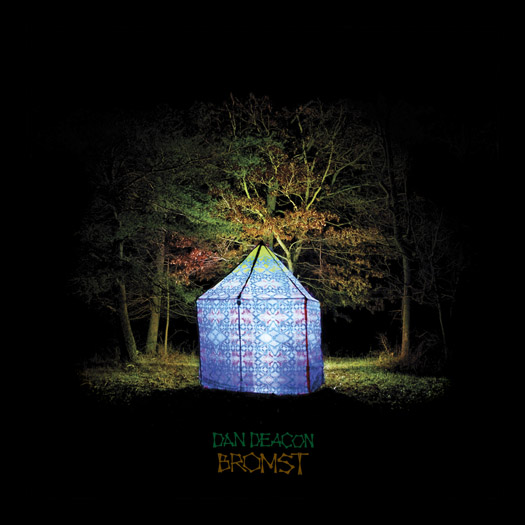
 Infinite Leagues had "For fans of early Eno and New Order" written on the distributor label, which is what immediately drew me to give it a listen. The voice does sound like Eno, but that was about the extent of the comparisons. The music is very touching, however, as it combines layers of lo-fi electronic pop to create a sort of surreal environment, again using repetition to set the mood. The closing track, "Good Guys," is especially phenomenal, most probably due to my affinity for vocoder experimentation. Side note: is it just me or does the cover look almost exactly like the cover (at least in idea) of Dan Deacon's upcoming Bromst LP? And, if the similarity was intentional, who copied whom? This one came out last October...


Finally, I somehow managed to get a copy of the new Junior Boys album that is scheduled for release in April, Begone Dull Care. Basically, it's amazing. Fans of Last Exit and So This Is Goodbye will definitely not be disappointed, and at the same time the duo manages to progress into new territory and refine their sound. "Dull To Pause" is just as heartbreaking as "Like A Child" while "Parallel Lines" is just as thrilling as "Teach Me How To Fight." Bravo! I'd post a picture, but unfortunately it's so premature to its release that it doesn't even have album art yet.
Ferndorf is the third album by neo-classical minimalist composer, Volker Bertelmann, who makes use of a technique called "prepared piano" to create his short pieces of warm, melodic goodness. The technique involves putting random objects between the strings of the piano, and it was first explored by early pioneers of experimental music like John Cage. The result, in addition to the other string and percussion instruments layered over the repetitive piano backdrop, is a folksy, earthy sound that quickly progresses around the musical ideas. The album is named for Bertelmann's hometown, and it actually captures what I imagine to be the feeling of riding a bicycle around some Eastern European country. Very pretty, especially "Rode Null" and "Eltern."
 Infinite Leagues had "For fans of early Eno and New Order" written on the distributor label, which is what immediately drew me to give it a listen. The voice does sound like Eno, but that was about the extent of the comparisons. The music is very touching, however, as it combines layers of lo-fi electronic pop to create a sort of surreal environment, again using repetition to set the mood. The closing track, "Good Guys," is especially phenomenal, most probably due to my affinity for vocoder experimentation. Side note: is it just me or does the cover look almost exactly like the cover (at least in idea) of Dan Deacon's upcoming Bromst LP? And, if the similarity was intentional, who copied whom? This one came out last October...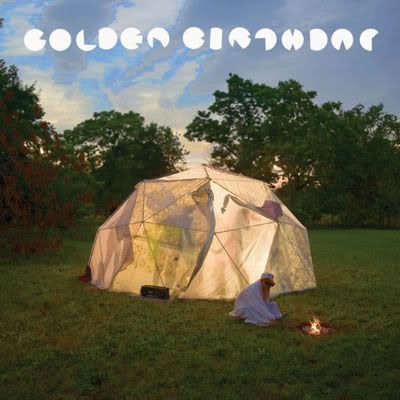
Subscribe to:
Posts (Atom)
